Biggest Stadiums in Spain: published capacities and what they mean
On this page6
Real Madrid’s Santiago Bernabéu and Atlético Madrid’s Riyadh Air Metropolitano are among Spain’s largest active football venues. Barcelona’s Camp Nou should be treated separately while redevelopment changes the number of seats available for matches.
Readers searching this topic usually want a current comparison, but venue data is not a single universal number. The table below uses published figures and labels the event or competition context so a temporary layout is not mistaken for a permanent capacity.
What is the answer in one minute?
The answer is definition-dependent. A venue can have a permanent seat count, a domestic standing capacity, an international seated capacity and a concert configuration. The most useful comparison is therefore the published figure plus the scope attached to it.
| Venue or definition | Location or scope | Published figure | Why the label matters |
|---|---|---|---|
| Santiago Bernabéu | Madrid | 83,186 | Real Madrid home ground |
| Riyadh Air Metropolitano | Madrid | about 70,460 | Atlético Madrid home ground |
| Mestalla | Valencia | about 49,430 | Valencia CF home ground |
| Ramón Sánchez-Pizjuán | Seville | about 42,714 | Sevilla FC home ground |
How should readers compare these figures?
Use the same unit, date and event type. A football league figure may include standing areas, while an international match may require every spectator to have a seat. Concert maps can remove seats for a stage or add floor inventory, so they should not be ranked beside a normal match without a note.
What does the source trail show?
The source list prioritises venue operators, clubs, leagues and governing bodies. Those pages are stronger for current capacity and use than an unsourced listicle, but they can still describe different configurations. If two official pages disagree, preserve both figures and explain the context.
What can change after publication?
A redevelopment, safety licence, competition rule, sponsor change or event layout can change the answer. The next review should recheck the headline venues, source links and any number presented as a current maximum.
What should a reader do with the answer?
Use this page to frame a ticket or attendance question, then open the venue’s own event page. Confirm the event date, seating map, accessibility information and ticket seller before making travel or purchasing decisions.
Frequently asked questions
Is the biggest venue always the busiest?
No. Capacity is a limit; attendance is an event count. Demand, pricing, safety holds and the event layout determine the crowd.
Why do two sites report different capacities?
They may be quoting domestic, international, concert or standing configurations. A responsible comparison names the configuration.
Are these figures guaranteed for every event?
No. The venue operator or organiser controls the event setup and ticket inventory.
How often should the page be checked?
At least annually, and sooner after a redevelopment, licensing change or major event announcement.
Where can I verify the number?
Use the named official source links in the source panel and record the date checked.
Bottom line
The useful answer is not just a large number. It is a published capacity tied to a venue, configuration, date and source. That method keeps the comparison useful when stadiums change shape, rules or event mode.
Related SportsLook reading
Frequently asked questions
What is the short answer to “Biggest Stadiums in Spain”?+
Real Madrid’s Santiago Bernabéu and Atlético Madrid’s Riyadh Air Metropolitano are among Spain’s largest active football venues. Barcelona’s Camp Nou should be treated separately while redevelopment changes the number of seats available for matches.
Why do published figures or advice differ?+
Sources may use different competition scopes, event configurations, measurement systems or dates. This page labels those differences instead of presenting an unsupported single answer.
Which source should readers check first?+
Start with the governing body, venue, organiser or official record source listed in the source panel, then check the date and the definition used.
Can this page be used as a rulebook or safety clearance?+
No. It is an editorial guide. Follow the current competition regulations and qualified safety advice for the actual match or player.
What should change on the next review?+
Recheck the headline figure, named entities, source links and any schedule, record, capacity or equipment guidance that may have changed.
Can a search result be treated as the source of truth?+
No. Search results help establish reader intent; the article uses the named official or authoritative source for each material claim.
Sources
Related stadiums & arenas guides
View all →
Biggest Stadiums in Australia: capacities, uses and caveats
A source-led guide to Australia’s biggest sports venues, with event capacity, configuration notes and official links.

Biggest Stadiums in Italy: capacity, club use and configuration
Italy’s largest football grounds compared using venue and league sources, with a note on seating changes for domestic and international matches.
Biggest Stadiums in New Zealand: a practical capacity guide
New Zealand’s largest multi-sport venues compared by published seating capacity and event use.
Largest Stadiums in the Southern Hemisphere: how to compare them
A measured comparison of major Southern Hemisphere stadiums, separating permanent seating from event-mode capacity.

Biggest Stadiums in Germany: football capacity and standing-room context
Germany’s largest football grounds explained with the standing-room and international-match distinction made explicit.
Biggest Stadiums in Australia and New Zealand
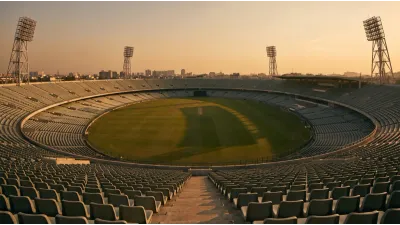
The MCG holds 100,024 — more than Eden Park and Wellington combined. And almost every ground in the region has two capacities, which is why lists disagree.